Charles Johnston is a cultural psychiatrist as well as a futurist. His perspective has its foundations in Creative Systems Theory with it concept of Cultural Maturity, the idea that our times are requiring—and making possible—an essential “growing up” as a species.
Cynicism today is rampant. Few people hold positive expectations when it comes to the future. This lack of hopeful images has critical consequences. It is unlikely that we would encounter today’s escalating rates of anxiety, depression, suicide, and violence if people were more generally optimistic about what lies ahead. And we confront the simple fact that cynicism all too easily becomes a self-fulfilling prophecy. If our future is to provide fulfilment, we must have compelling and realistic images of what that fulfilment would look like and how it might be achieved.
In my most recent book Insight: Creative Systems Theory’s Radical New Picture of Human Possibility, I describe how most at all current positive images ultimately fail at the task. Certainly this is the case with utopian pronouncements. Techno-utopian claims promise that new inventions will save us. But we know all too well that as often as new technologies provide benefit, they put us at risk. Invention can work as an answer only to the degree we are capable of using invention wisely. We also find utopian images of a more spiritual sort. For certain people, they can be particularly inspiring. But in the end, they reflect wishful thinking more than anything that can provide real guidance. And they commonly suffer from a more specific shortcoming. They tend to attract people who share specific idealised, ideological beliefs. We do not in our time need contemporary versions of time-worn “chosen people” narratives.
Hello, I’m Anne-Lise, a Senior Sustainability Advisor. I am French, from the border with Germany and I now live in Rome, Italy. I grew up in a small village near the mountains eating the vegetables and fruits my father was cultivating behind our house. I am an Industrial Engineer, with a Masters in B2B Strategy and Marketing.
What does a good future look like?
“Sustainable development is not a fixed state of harmony, but rather a process of change in which the exploitation of resources, the direction of investments, the orientation of technological development, and institutional change are made consistent with future as well as present needs.” Brundtland Report, World Commission on Environment and Development, 1987
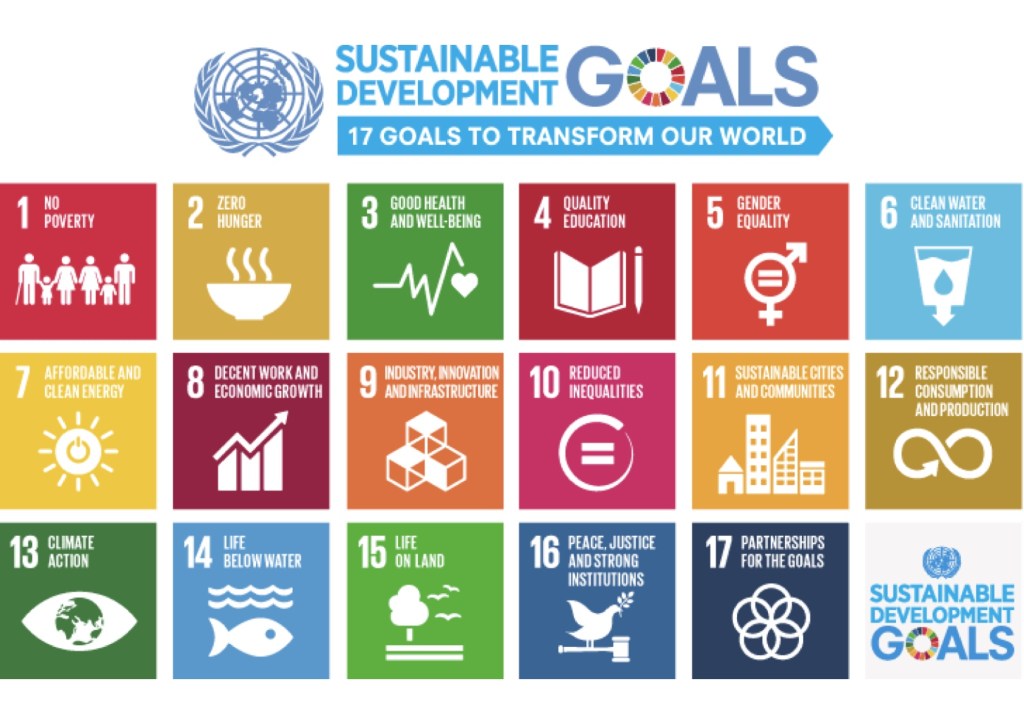
I know that I want a better world for the future generation. That means meeting our current needs without putting at their needs – This is the very definition of sustainable development. I believe our 17 sustainable development goals will help us get there:
I know that achieving a good future is feasible. Many companies are working to contribute directly or indirectly to all the SDGs, and this is achievable because we did it before – we reversed the hole in the ozone layer when we worked together. Now, we have the technology and ability to create even better solutions in the world – where so many people are already creating so much positive impact.
How can we build a good future?
The current economic model of neoliberalism is broken. We need a model where everyone can be included. Constantly competing against each other and trying to individuate ourselves is not making us happy. As humans, we have the capacity to be incredibly good at altruism and cooperation, and we know that it can give us joy. We also know that we are the heroes of our story of restoration and regeneration. The story of building a better world.
BUT we do not know the story… let’s create it together
“Saudi representatives pushed at the United Nations global climate summit in Egypt to block a call for the world to burn less oil, according to two people present at the meeting, saying that the summit’s final statement “should not mention fossil fuels.” The effort prevailed: After objections from Saudi Arabia and a few other oil producers, the statement failed to include a call for nations to phase out fossil fuels.”
Shimmering in the desert is a futuristic research centre with an urgent mission: Make Saudi Arabia’s oil-based economy greener, and quickly. The goal is to rapidly build more solar panels and expand electric-car use so the kingdom eventually burns far less oil.
But Saudi Arabia has a far different vision for the rest of the world. A major reason it wants to burn less oil at home is to free up even more to sell abroad. It’s just one aspect of the kingdom’s aggressive long-term strategy to keep the world hooked on oil for decades to come and remain the biggest supplier as rivals slip away.
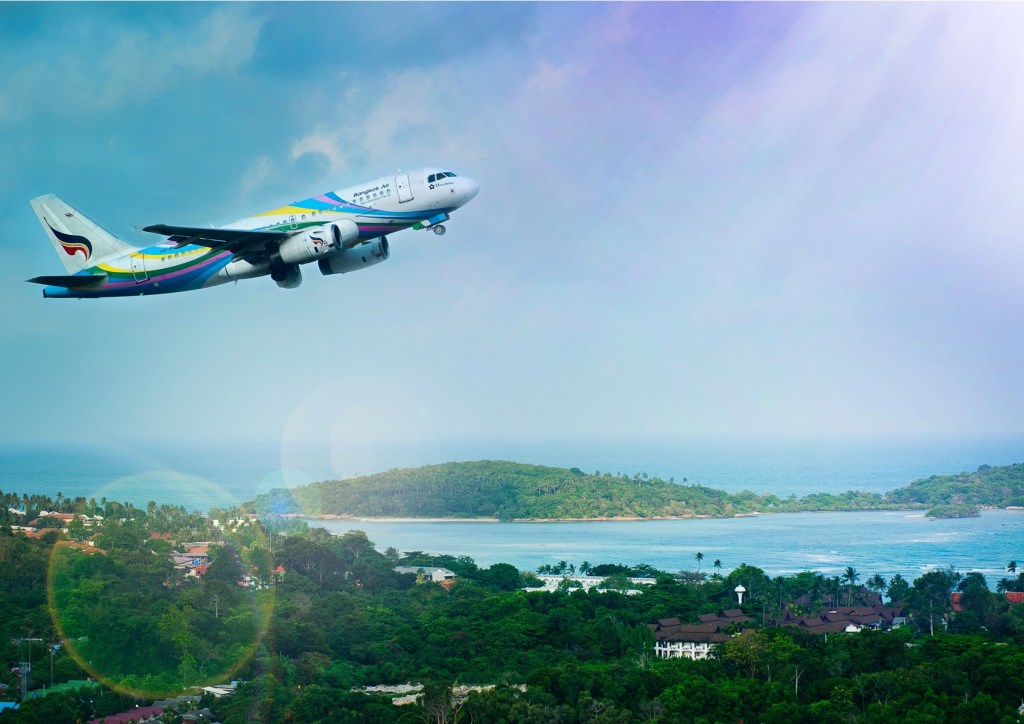
“The richest 20 percent of people worldwide take 80 percent of the flights, according to estimates by the International Council on Clean Transportation, a nonprofit think tank. The top 2 percent of frequent fliers take about 40 percent of the flights.”
The target to reach “net zero” emissions — a point in which air travel is no longer pumping any additional carbon dioxide into the atmosphere — would require the aviation industry to significantly step up its climate efforts. Previously, companies had relied on offsetting aviation’s emissions growth through tree-planting programs or through yet-to-be-proven technology to pull carbon dioxide out of the air.
But to reach net zero, companies and governments would need to invest hundreds of billions of dollars in increasingly efficient planes and cleaner fuels to sharply reduce emissions from air travel itself. And even those investments are unlikely to be enough, compelling countries and companies to adopt policies to curb flying itself, by scrapping fuel subsidies or halting airport expansion plans, for example, or ending frequent flier programs.
Technology & Humanity – AI, AGI, ethics of technology, genetic engineering, genome editing etc.
Future-fit Economics – sustainable economic models for the future, what the stock market is rewarding and not rewarding etc.
Our purpose is all about creating a new narrative:
We don’t have a lot of good stories about the future. Hollywood, Bollywood and social media are filled with negative stories. For us it’s about looking back at the technological advancements we’ve made, the advances in health etc. that allows people to live better and longer than ever before and then where we go from there. This new narrative is about:
Optimism – It’s about being stubborn, believing that it is possible. It’s about choosing to take sides in the narratives. The future is political!
Empowerment – Encouraging and giving the platform for people with good stories to come forward and share them, and as supporters – amplifying these stories.
Inspiration – Creating inspiration through various formats of narratives – writing, posts, e-books, videos, films, events etc.
Change – Thinking about how we might influence lasting change in the future, for the better.
The Good Future Festival
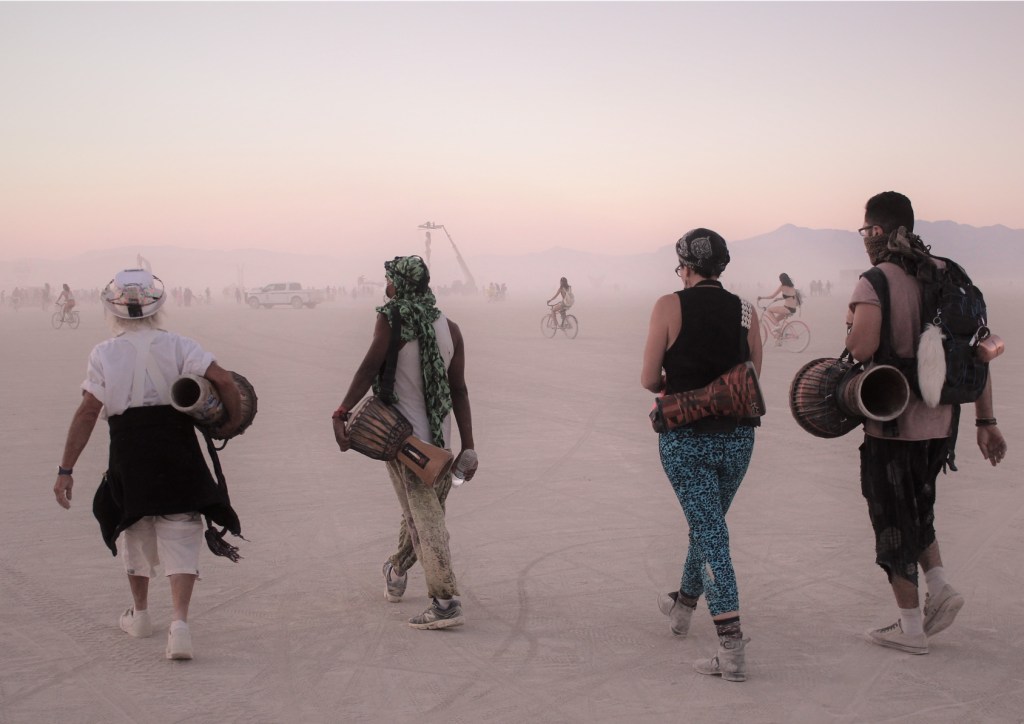
We are thinking about bringing together proponents of the Good Future at the “Good Future Festival”, which could be a mash-up of Davos, Ted and Burning Man! Tell us what you think.
What you can do right now:
Follow us on social media:
Follow our twitter page and use #goodfutureproject to start spreading the word
Like our Linkedin Page and share posts
Join our Linkedin Group to share ideas and thoughts
Watch our videos on Youtube and spread the word
Start sharing your stories!
Write a short piece for our website and social media channels about:
Why you are a project member or supporter
What a good future means to you and why you believe it’s possible
You can write a short blog post, a longer piece or even do a video for us. Send an email it directly to our project manager to find out more.
“55 vulnerable countries estimated their combined climate-linked losses over the last two decades totalled $525 billion, or 20% of their collective GDP. Some research suggests that by 2030 such losses could reach $580 billion per year.” Read those numbers again—they are astonishing (a fifth of GDP!) and there is no doubt where justice lies: the iron law of global warming is, as always, those who did the least to cause it suffer first and most.
…
“The tactic of the bad guys is delay, and delay is incredibly easy to achieve; a body at rest stays at rest. Our job is acceleration, and that’s not happening, at least at the pace that’s required. We’re starting to run out of years, so we best make the next one count.”
Globalisation may have fallen out of favour in recent years, but preserving it is an environmental imperative. Effective, coordinated responses to climate change are being set back by the shrinkage of cross-border trade and investment flows, and by the accompanying rise of isolated regional trading blocs. …
“The key inputs for batteries – lithium, nickel, and cobalt – are projected to be in short supply within the decade, as are the rare earths used for electrodes. Global battery production will suffer if manufacturers have to “friend-shore” these commodities. After all, most of these resources are mined in unstable or conflict-ridden countries, like the Democratic Republic of the Congo, and much of the existing refining is done in China and Russia.”
What is the Future of Work ? Technology Futurist and Filmmaker Ian Khan discusses the trends shaping industries across the world. Featuring one on one interviews with leading Future of Work experts, the film is a must-watch for anyone looking at learning about where work is headed.
Experts Featured and Consulted in the Future of Work Documentary
Dr. Abagail Gilbert, Head of Research, Institute for the Future of Work https://bit.ly/3742lGn
From childhood on, we are trained to believe there is a right way of doing things – and that we better learn it, or else. In school, in university, and later in the form of job descriptions – we are always told what to do. If we don’t know what to do, it must mean we aren’t good enough or didn’t understand enough. Of course, reality is different. Things aren’t clean and orderly.
While organizations focus on creating repeatable processes, in a world of rapid transformation, those processes at times have to change overnight. How do you stay grounded and keep the important things in focus? Who do we have to become to not just survive, but thrive in uncertainty? In this webinar, we will look into what is happening in the big picture, and what you can do as an individual leader to transform yourself for a future or continuous transformation.
Walk away with
How to transform yourself for the future
A new perspective on your leadership
An overview of how your human operating system works
The seven key capacities for leaders of the future (from how to embody leadership and attune to the moment to activating your unique vision and calling)
About the speaker: Philip Horváth is an international culture catalyst, teacher and advisor. He specializes in systemic and individual transformation, he works with change leaders and innovators to ignite their teams, organizations and ecosystems to create a thriving human future.
He has worked with clients such as Siemens, Airbus, Vodafone, T-mobile, BAC Credomatic, Facebook, NBC Universal and many startups and new innovation ventures.
How Storytelling Can Change The Future – What’s Wrong and How to Fix It.
Written by Chris Sean Nolan, Multiple Emmy Director, Story Expert
Destination: Protopia
Futuristic Barbara Marx Hubbard said, “The future exists first in imagination, then in will, then in reality.” She added, “As you see the future, so you act and as you act, so you become.”
Well, what if we could imagine a world that is continually getting better, becoming more abundant, improving our livelihood and health, and creating unheard of opportunities and possibilities? What if that were, in fact, the world we are now living in? Then, according to Hubbard, we should all be acting and behaving with optimism and hope. Yet, the opposite is true. The world is awash in pessimism and fear of tomorrow. There’s a malaise, even a dread about the future.
So, what’s the disconnect? Why is the real story of a better future not being told? Why is the truth so distorted? And what’s that doing to our imaginations? Neuroscience tells us stories affect our physical and mental makeup on many different levels. Stories can change our brains and directly impact our thoughts, beliefs, feelings, and actions. They shape our world.
So, if our brains use stories to make sense of the world then how are the unavoidable and increasingly apocalyptic news and entertainment narratives shaping our worldview? It’s no wonder we can’t possibly see any the good in the future. Or what Kevin Kelly, the founder of Wired magazine, calls Protopia. This isn’t Dystopia or Utopia but simply a future that is getting exponentially better and better.
The Good, The Bad and Your Brain
There’s a reason these negative stories stick with us. Human brains are evolutionarily wired to be nine times more negative than positive. The more fear-based the story, the more it catches our attention. Thus, the old newspaper adage, “If it bleeds, it leads.”
Unfortunately, this negative default mode can prevent us from seeing the good in the world (or even ourselves). When we’re always in survival mode, we have a hard time grasping just how abundant our lives are and why this is an amazing time to be alive. Yes, we have enormous challenges: The looming consequence of climate change, continued water and energy needs, geopolitical and social unrest, a growing marginalised population, species extinction, and a need for greater empathy for all living things.
But we’ve also doubled the lifespan of the average human, income around the world has tripled, and despite recent inflation, the cost of goods (food, energy, transportation and communication) has dropped 1000-fold. Global literacy has gone from 25 to 80 percent. Furthermore, technology continues to make things more available and sustainable by driving down the cost of food, energy, healthcare, and housing.
Soon the entire planet of 9 billion people will be connected. When that happens the pace of innovation will be mind-boggling. AI will become ubiquitous and dramatically enhance human capabilities by allowing us to solve problems that have heretofore been unanswerable. But sadly, we don’t see progress. Because another neural glitch in our brain’s medial frontal limits our ability to comprehend the speed of exponential change.
The human brain evolved in an environment that was local and linear. In our ancestors’ lives everything was a day’s walk away and the rate of change was very slow. Just over a century ago, the speed of a horse was as fast as information could travel. Now, if something happens on the other side of the planet, we hear about it a millisecond later. The world has not only become global but exponential. This new era is what I call VUCA MAX.
VUCA MAX: The Future is Moving Faster Than You Think
Massive accelerating exponential change really started kicking in around 2020 during a pivotal point in human history we weren’t prepared for. In my documentary: It’s VUCA: The secret to living in the 21st century, the mission was to help the world catch up to these radically changing times.
VUCA is an acronym for Volatility, Uncertainty, Complexity, and Ambiguity. It was coined by the military in 1987 to explain the uncertainty of the 20th century and is a very apt way of explaining the conditions and environment of the early part of the 21st Century, in which we were witnessing Moore’s Law – every 18 months the power of technology was doubling – and transforming the world. It’s why the smartphone in your pocket is now a million times faster, a million times cheaper, and a thousand times smaller than a supercomputer on the 1970s.
Now, the exponential convergence of Moore’s Law, Metcalfe’s Law, and Wright’s Law have created VUCA on steroids. The doubling is converging and compounding. VUCA is now Massive, Accelerating and eXponential. It’s now VUCA MAX. To give you an idea just how fast the future is moving, in the next 10 years we will see 100 years of change. In the next 80, we’ll see 20,000 years.
Unfortunately, our evolutionary propensity for negativity and linear bias overwhelms us and leaves us vulnerable to our worst fears and distorted dystopian outlooks. It not only blinds us to the truth about the future, and how the future is more abundant that ever – but it also has an adverse impact on our mental health.
Can Entertainment Save Tomorrow?
There’s always been criticism of the news media and entertainment emphasising sensationalism and exaggeration over reality. Fear mongering and manipulation goes back to yellow journalism culminating with Orson Wells’ 1938 radio broadcast of a Martian invasion.
Now, of course, we know that dystopian scenarios in movies and networks are fictitious. However, given our predisposition to fear and negativity, the entertainment media must be aware of and held both responsible and accountable for the creation and manipulation of the public zeitgeist. Going forward, I will make the augment that there are ways to dramatise narratives and even present dystopias, but still create a more balanced, realistic, and even exciting view of the future.
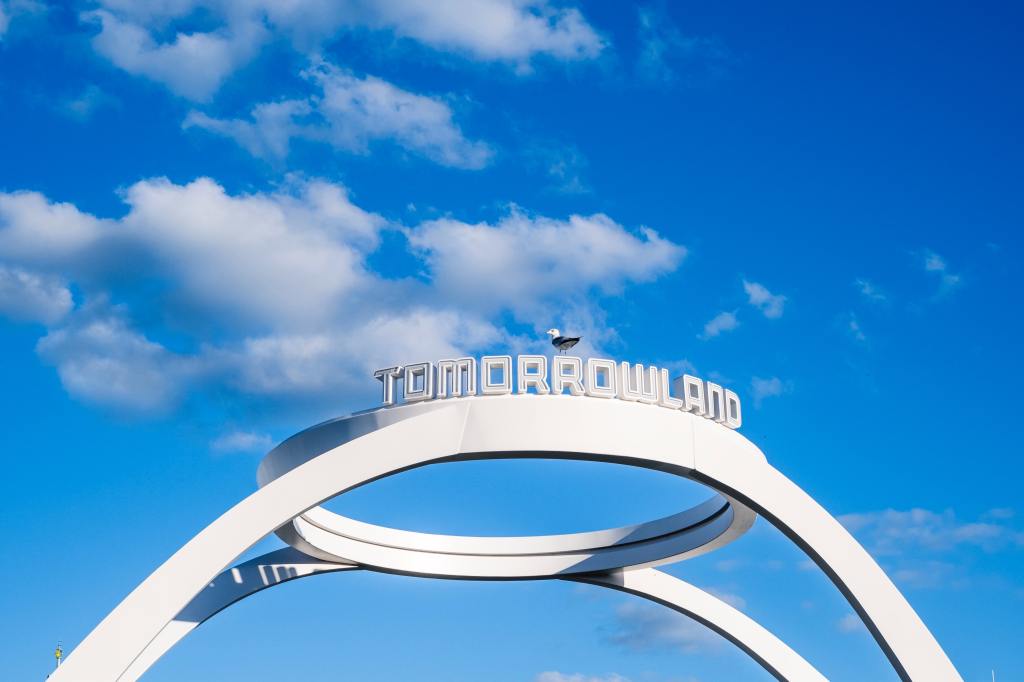
Tomorrowland
“Tomorrow is a heck of a thing to keep up with.” – Walt Disney Walt Disney was a technological innovator, science fiction storyteller, and futurologist. He dedicated Tomorrowland with the words, “A vista into a world of wondrous ideas, signifying man’s achievements … a step into the future, with predictions of constructive things to come. Tomorrow offers new frontiers in science, adventure, and ideals: the Atomic Age, the challenge of outer space, and the hope for a peaceful and unified world.”
As part of the Disneyland television show, Walt presented three one-hour “science factual” episodes that mixed humour with hard scientific facts to give the audience an exciting glimpse into the future.
Let’s contrast that protopian vision with the 2015 movie, “Tomorrowland”. In the film, the antagonist sabotages humanity’s vision of the future by beaming horrific prognostications and the imminent collapse of the human race into everyone’s heads. And since our brains are wired to gobble up negativity and fearful information, the antagonist’s broadcasts easily transformed humanity into a pessimistic and hopeless populace without will, purpose, or dreams.
Although the villain is a bit stereotypical, the theme and plot mirrors what’s happening in our world today. Namely, that a constant fare of grim, paranoid, fearful apocalyptic programming can’t be good for our heads.
No Future Is Perfect
Hollywood movies and TV haven’t always tilted toward dystopia. The classic sci-fi movie “2001: A Space Odyssey” had some dystopian themes (everyone remembers Hal) but it also portrayed the evolutionary development and limitless potential of the human species.
Two seminal futuristic narratives of the 1970s, “Star Wars” and “Star Trek”, also had some dystopian story elements but overall, they were positive narratives with hopeful endings. Star Trek narratives took on many weighty themes including racism, religion, genocide, extinction, mental illness, sexism, morality, death, and time travel.
And even though Star Trek took place in space, the stories were always allegories about life on Earth, which is why the Star Wars and Star Trek franchise have been charting a course for a hopeful future for half a century –– while many dystopian themed programming have exhausted their storylines.
Where Is Our Lucy?
Ironically, Star Wars and Star Trek were not easy sells. All but one studio turned Star Wars down and no major studio would touch Gene Roddenberry’s plan for a race and gender integrated crew representing the future of humanity. In fact, if it weren’t for Lucille Ball, there would be no Star Trek.
Lucy had just divorced Desi and was now running their independent production company Desilu. Star Trek was sold as a western in space, but the pilot was rejected by NBC. The series was dead. But, because Lucy was now swimming in profits from reruns from “I Love Lucy”, she did something unheard of. She paid for a second pilot and is credited as the main reason Roddenberry achieved his positive vision for the future.
Some might say dystopias are an easier sell and perhaps even easier to write. Or as British Sci-Fi writer Brian Aldiss calls them, “cozy catastrophe” stories. Many are basically horror stories with simple plots and clearly identified evil. Protopias on the other hand build plotlines calling for deeper multidimensional layers, character development, and complexity.
Positive Signs: It Can Be Done
Cory Doctorow is one of the most relentless and inventive authors writing at the junction between speculative fiction and real tech. Doctorow is on a mission to inspire positive futures. “Protopia is not the assumption that nothing will go wrong. Being hopeful means believing that when things break down, we can rebuild them. It’s still possible to model positive future outcomes and have a dramatic story.” Doctorow adds, “Disasters are where we rise to the occasion. They are humanity’s best moments, when we sacrifice ourselves for others.”
This is one of the things we addressed in the documentary, “It’s VUCA. The Secret To Living in the 21st Century”, that in time of great chaos and uncertainty, people have always demonstrated the greatest fortitude, resilience, courage, and empathy for each other. Things go wrong. People make mistakes and disagree, especially concerning the criteria used to govern technologies or how to deal with big complicated, future challenges –– but we figure it out.
A shining example of a Protopia film is “Arrival” directed by Denis Villeneuve based on the short story “Story of Your Life” by Ted Chiang. It’s about a linguist enlisted by the United States Army charged with learning how to communicate with extraterrestrials that have arrived on Earth before tensions lead to an intergalactic war. “Arrival” not only provides a window into what communicating with other sentient species might look like, but it also portrays aliens as bent on saving humanity rather than annihilating it.
The Power Of A Single Image
Even a single image can change the story.
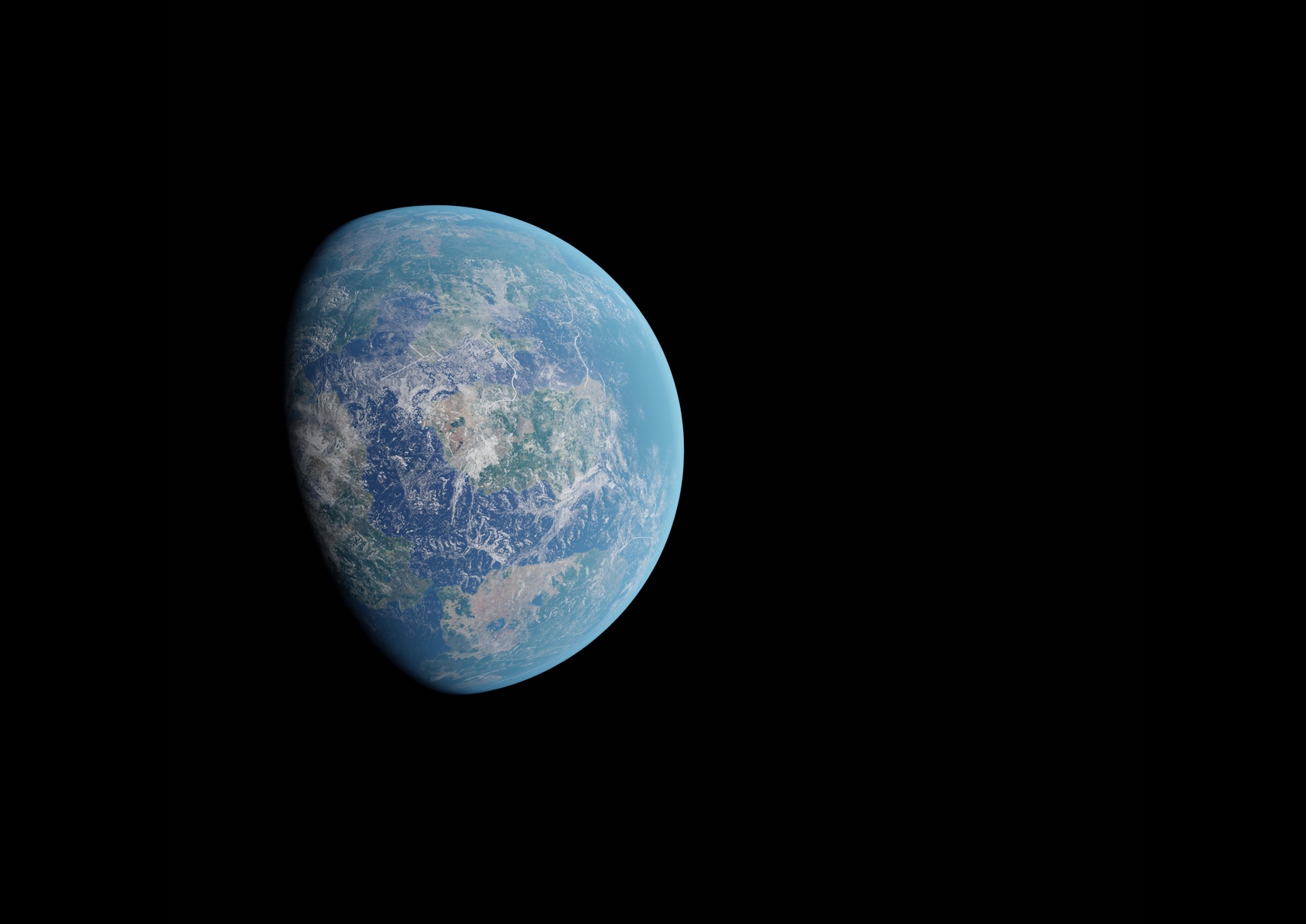
In 1966, the world was consumed by pictures of mushroom clouds and atomic bomb tests. The images of the nuclear blasts made people feel that civilisation was doomed. Being a photographer and activist, Stewart Brand knew that images change people’s behaviour. So he began a campaign for NASA to release an image of the whole Earth in space.
Brand even made-up buttons that asked, “Why haven’t we seen a photograph of the Whole Earth yet?” When NASA finally released the image of the Whole Earth taken by NASA astronauts, this single, hopeful, beautiful image blew away the dark atomic clouds.
People not only saw a brighter future but it helped create what became the transformative ecological movement. We were no longer passengers on a planet, we were the crew and responsible for its wellbeing. This one image changed the story from humanity is capable of destroying itself with technology to humanity is capable of discovering itself.
Sixty Seconds To Protopia
As a branding and storytelling expert, I’ve had first-hand experience with the power of story and messaging. One of the best examples is Apple’s “1984” considered the greatest TV commercial ever made. It opens in a dystopian world that’s disrupted by a singular woman who hurls a sledgehammer at a giant screen displaying the Big Brother broadcast – destroying it. Not only did the revolutionary ad almost single-handedly bring computers into the mainstream, changing the world as we know it, but it defined in our minds Apple’s protopian vision of the future of technology.
We now envisioned computers as empowering individuality and saving humanity from a bleak future of control. A control represented at the time by the giant computer behemoth Big Blue or IBM. Today, Apple is the most valuable company in the world whereas IBM no longer sells personal computers and is one-tenth the size of Apple. It’s a stark example of how the stories we tell about the future contribute to how we imagine the future, which in turn can become reality.
Bringing The Future Home
Kevin Kelly, the founding executive editor of Wired and former editor and publisher of the Whole Earth Review (the descendant of Stewart Brand’s Whole Earth Catalog) postulates, “Perhaps at this stage in civilization and technological advance, we enter into permanent and ceaseless future-blindness. Utopia, dystopia, and protopia all disappear. There is only the Blind Now.” Kelly continues to hope that our current future-blindness is only a passing phase that future-blindness is not an inescapable or permanent affliction of our modern world, which brings us back to storytelling.
Once Upon a Time in America we were so excited and awestruck by the possibilities of the future that we celebrated progress with a worldwide story known as The World’s Fair The 1939 New York World’s Fair featured “The World of Tomorrow” and people came back from it proudly sporting buttons that said, “I Have Seen the Future.”
I grew up in Seattle where The Century 21 Exposition in 1962 (also known as The Seattle World’s Fair) saw the construction of the Space Needle, now the iconic symbols of The Jet City. Century 21 featured a futuristic monorail and a trip to a better “World of Tomorrow” which, ironically, was during the height of The Cold War. “The World of Tomorrow” began with a ride in the Bubbleator, a 19-foot diameter spherical Plexiglas elevator. General Electric and Johnson’s Wax built model home interiors that brought the future home. It explored the life of the woman of tomorrow, featuring a household with “push-button ease” for everything but changing the baby.
World’s Fair’s partnered with leading American companies and entertainment companies to educate people about the future. At the 1964 New York World’s Fair, Disney debuted four major attractions including Ford’s Magic Skyway, It’s A Small World sponsored by Pepsi-Cola/UNICEF, Great Moments With Mr. Lincoln from the State of Illinois, and General Electric’s Progressland. These attractions eventually became part of Disneyland’s Tomorrowland. And, following their success, Walt moved forward with Project X, which would become EPCOT –– the Experimental Prototype Community of Tomorrow.
These World’s Fairs helped humanity visualize, celebrate, and physically experience technological progress and the benefits of the future. Unfortunately, the last World’s Fair in the United States took place in 1984.
A Way Forward: Urgent Optimism
Jane McGonigal from The Institute For The Future believes, “This is a time for urgent optimism.” We need to flip the script on the dark future otherwise heading into the unknown has little value. In other words, we have to believe the struggle is worth it. But to do this, the future needs champions.
Whether the story is presented by an entertainment company, a corporation, a city expedition or an individual with a vision, we need to embrace Protopia narratives and experiences. Stories that become a force for The Good Future and positive stewards of renewed optimism. By guiding the world toward a more realistic view of the future, we empower people, especially younger generations, to believe things are getting better, not worse –– and give them hope and inspiration that they can meet the grand challenges of tomorrow.
Today, young people are chronically pessimistic and depressed about their future. In a recent survey of 16 to 25-year-olds in ten countries 70% said, “humanity was doomed”, which is why it’s more important than ever to behave as if the world is evolving not collapsing. It only takes one person with the vision and the right story to change the consciousness of the planet.
As Barbara Hubbard said, “How we see the future determines our story, how we act, and become.” Let’s uplift imaginations toward the unimaginable possibilities and abundance ahead. Let’s reverse fear and the dystopian zeitgeist by creating stories that can change the world for the better and inspire bold vision and ambitious action. And empower people to become the heroes of tomorrow’s stories.









 The Good Future Project