• Well-being Interior Design By Nuria Munoz

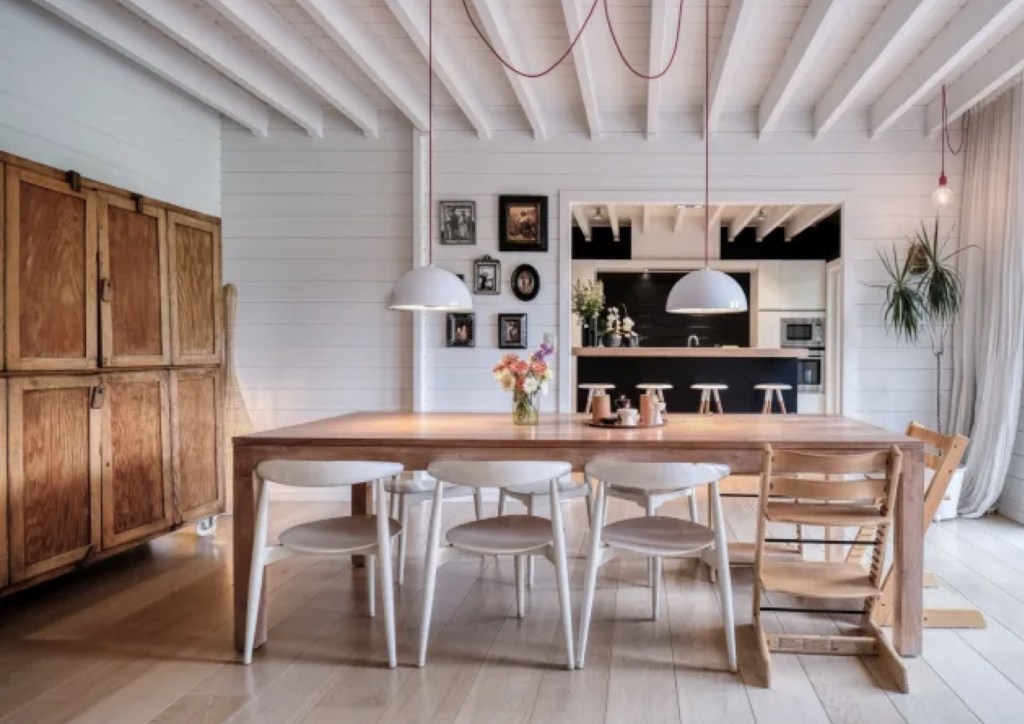
    Well-being Interior Design is an interior design practice with a mission to elevate the quality of life and promote wellness and happiness indoors where we live, work, learn, heal, and play. This is achieved by applying many disciplines and platforms and using research, technology, and innovative design solutions.

    It is key to know that Well-being Interior Design heavily depends on scientific studies and research and cannot achieve its purpose without drawing upon the findings of natural science, human biology, environmental psychology, Biophilia, and ergonomics.

    It’s no longer “just an intuition” that our physical and psychological well-being is significantly impacted by our physical environment. Much research has shown that interior conditions impact our respiratory and immune systems, heart rate, blood pressure, anxiety, stress, moods, productivity, creativity, relationships, sleep, and the list goes on. Implementing the appropriate design elements is capable of supporting not only the highest quality of life but also supporting people in their healing and recovery from emotional and physical illness.

    Why Now?

    Every study points out the importance of nature to our health and wellness. Since the industrial revolution in the 1800s, we’ve started spending more time indoors detached from nature, the source of our well-being. We will never be truly healthy, satisfied, or fulfilled if we live apart and alienated from the environment from which we evolved” – Stephen Kellert, Professor of Social Ecology at Yale University and pioneer of the Theory of Biophilia.

    In modern and developed societies, we spend 90% of our time indoors. Issues and illnesses like insomnia, allergies, stress, depression, and anxiety are on the rise. Well-being Design examines how nature positively impacts health and wellness and uses the most impactful design elements and technology to recreate this environment indoors.

    In addition to nature, human beings need an emotionally healthy environment to thrive. Well-being Interior Design examines the individual and collective psychological needs, from self-expression and belonging to connection and satisfaction, and creates the ideal conditions that help people flourish.

    High-performance organizations have figured this out, as they can attest that healthier employees meant more productivity and prosperity for the organization as a whole. These positive gains have generated changes in the commercial construction and design industry as the demand grows for designs and products that support the health and wellness of business environments.

     The residential industry, however, is a bit behind in this area. We still talk about form & function and color of the year but are missing the critical dimensions that improve the quality of our lives and strive for higher states of well-being.

    Which is the actual situation of well-being Interior Design in the Residential Industry?

    Most current homes are not planned with well-being in mind and not only fail to support current life demands to contribute to emotional or physical malaise. 

    Today, we need a home design that addresses contemporary challenges; stress, social isolation, loneliness, inactive habits, alienation from nature, aging, ADHD, climate change, pollution…

    Which is the solution?

    By understanding the impact of the surrounding environments on the physical and psychological aspects of the human being, well-being interior designers co-create positive places that respond to the needs of each individual and group whether functional/physical, aesthetical, emotional, intellectual, mental, or spiritual.

    The impact can be immediate bringing joy to people as soon as they step into a room, helping people start and maintain healthy habits, improving family ties and intimacy, helping increase focus, productivity, and creativity, and helping people relax and have a deep and restful sleep.

    For specific issues such as depression, anxiety, stress, ADHD, SAD, ASD, mobility issues, aging, etc., this mindful design can provide a supportive environment that nurtures and promote ease, healing, and recovery.

    By working with a well-being designer specialized in BIOPHILIC DESIGN  you will…

    • Create more welcoming and homely spaces adapted to your and your family’s needs
    • Enhance the wellness of the people living in physical, practical, and emotional ways. 
    • Shape an aesthetically balanced nice space
    • Create more restorative spaces that can alleviate stress levels
    • Apply easily tailor-made interior design
    • Improve mood through your creations
    • Get a greater sense of vitality
    • Reinforce nature – connectedness
    • Enhance concentration 
    • Reduce stress
    • Gain better sleep quality
    • Create more sustainable spaces 

    WITH BIOPHILIC DESIGN WE RECONNECT PEOPLE WITH THEIR NATURAL ROOTS AND THUS CONTRIBUTE TO HEALTH AND WELL-BEING AND HAPPINESS! 

  • 9 astonishing ways that living standards have improved around the world

    This article is available on Big Think

    “On what principle is it, that when we see nothing but improvement behind us, we are to expect nothing but deterioration before us?” 
    —Thomas Babington Macaulay, Review of Southey’s Colloquies on Society, c. 1830

    Over the last 200 years, the lives of average people in every country have been radically transformed and improved. In our modern day, we are living longer and are more prosperous than ever before — in both high-income and low-income countries. And while progress forward is by no means progress completed nor a guarantee of progress to come, the remarkable improvements in global living standards serve, not as a high water or finish line, but rather as a source of inspiration and hope.


    Listen to Article on BigThink

  • What is Chokepoint Capitalism? by Cory Doctorow

    Why copyright alone can’t unrig creative labor markets, by Cory Doctorow

    This article is available on Medium 

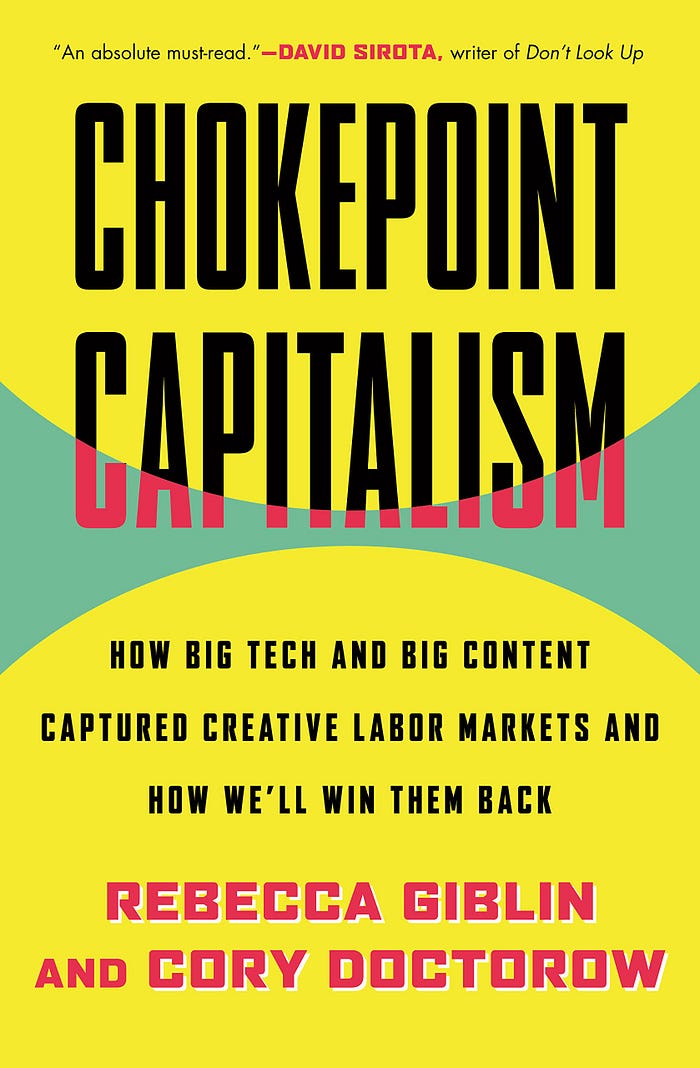
    Chokepoint Capitalism is my next book, co-written with the brilliant copyright scholar Rebecca Giblin. It’s a book about how the markets for creative labor were rigged, and how artists, fans, tinkerers, regulators and lawmakers can unrig them.

    That second part is key: this isn’t just a book complaining about how tough things are for artists — it’s a book about how we can make things better.

    There’s an obvious reason that our book’s focus on shovel-ready projects to put more money in artists’ pockets is important: you’d have to be a monster to prefer a world that underpays the writers, musicians, actors, and film and TV creators whose work heartens and delights you.

    The cover for the Beacon Press edition of Chokepoint Capitalism.


    Read More

  • Shaping the Future of Journalism by Puruesh Chaudary

    By Puruesh Chaudhary

    This article is available at FastFuture

    Social media, citizen journalism, AI-based reporting systems, big data, auto-generated news articles – with so much disruption happening, what will the future of journalism be? How will it survive all of these drastic shifts? Puruesh Chaudhary tackles these very questions in her chapter, “Shaping the Future of Journalism” and offers up foresight journalism as a potential solution. In this small interview, Puruesh tells us about herself, her chapter, her current projects, and what actions she believes would lead to a better future for us all.

    What is the focus of your chapter in The Future of Business?

    Journalism plays an important role in shaping public perception and opinions. While my chapter briefly highlights the use of technology as one of the key determinants of processing tremendous amount data and information in easy to understand linguistics either in form of human or artificial intelligence, it also underscores the urgent need to introduce foresight journalism, keeping in view of values and ethics in the academic sphere. Over the last decade or so bourgeoning sources of news have enabled information consumers to question the traditional infrastructure, often providing one dimensional coverage greatly undermining a relationship based on trust. Although ‘content is king’, the loss of confidence in these conventional mediums has created space for knowledge entrepreneurs to produce quality journalism, where maintaining public trust is the core interest. These alternate sources with a non-linear approach have the ability to adapt to technological advancements and respond to the rising needs of the consumer at a much faster scale.


    Read More

  • The Transformation Series by Peter Leyden

    This article is available on Peter Leyden

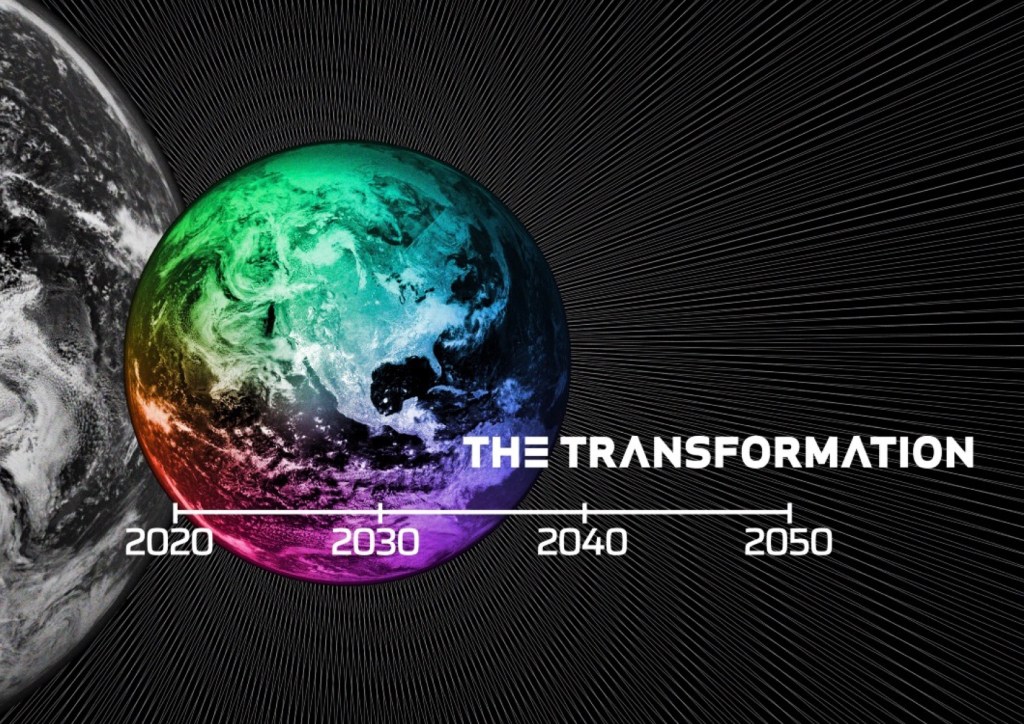
    The Future History of America and the World to 2050

    The introduction to a positive and plausible scenario about how we could solve our many challenges and transform our world for the better in the next 30 years

    How will we ever get beyond this coronavirus crisis? How will we dig ourselves out of this economic hole? And even if we somehow do get beyond the pandemic, how will we solve mounting economic inequality? Or deal with longstanding racial inequities? Or get past our political polarization? And then how will we ever solve the unprecedented challenge of climate change?

    Most of us are trapped in the anxiety-provoking present and fearful of a future that we can barely see. We find it hard to see that we might actually be part of a bigger-picture story that is much more positive and is making progress on solving all those daunting challenges. We can’t believe that we may be heading toward a better future that’s playing out over the long-term but just at a slow and steady historical pace that’s hard to detect day to day.


    The Transformation Series

  • The Road Not Taken by Bob Leonard

    I ran across a music video on YouTube last night. It was produced in 1987 by an Australian band named Midnight Oil. The song (you may remember it) is “Beds Are Burning”. It resonated with me because of the recent fires in Australia. It seems eerily prescient now.

    “How do we sleep while our beds are burning? The time has come, a fact’s a fact. It belongs to them (referring to aborigines). We’ve got to give it back.” 

    It tells a story of a road not taken. What if, instead of imposing our western culture on indigenous peoples all over the world, we adopted their cultures? We would not be in the mess we are in today.

    Our way of life, a capitalist economy and a consumer society, served us well until about the fourth quarter of the last century. Billions around the world were lifted out of poverty, were fed and educated by a system that rewarded hard work and ambition. Unfortunately, that is no longer the case. Removal of regulations, in order to stack the deck in favor of a ruling class, has led to income inequality, social injustice, a sixth extinction event, and a climate on the brink of catastrophe.

    Indigenous values are rooted in a relationship to land and water radically different from capitalism. For indigenous people, land and water are regarded as sacred, living relatives to be revered and protected. Our Western culture separated humanity from other animals and anointed man with mastery over the natural world and all living things. That was wrong-headed and self-aggrandizing, and we are paying the price now.

    Fifty years ago, R. Buckminster Fuller wrote a book called “Utopia or Oblivion”. Fuller suggested that in a few decades humanity would approach a fork in the road: utopia or oblivion. Would we be proactive and let go of our past ways of behavior and seek a higher level of living and consciousness? Or would we blindly travel down a destructive path? I think it’s plain to see that we passed the fork in the road and are barreling down the path to oblivion.

    It’s ironic because the path that we are on embodied a utopian vision called the American Dream, wherein hard work, land and a home are a platform for boundless opportunity. Homeownership no longer provides the economic security it once did, and appears out of reach for younger generations. The richest 1% holds more wealth than the rest of the world combined. At the same time, environmental degradation and climate change proceed at a terrifying pace.

    It is understandable that many people from everyday walks of life feel overwhelmed and seek solace in simplified narratives of a bygone “golden age” when they had a sense of being in control. What is profoundly irresponsible, however, is for politicians to deliberately stoke these illusions for their own aims of securing and sustaining power.

    Indigenous people today stand on the front lines of global movements fighting for a more just relationship between humanity and the land. In the music video, the white band members are shown interacting with aborigines. Maybe it isn’t too late to join the indigenous and forge a new path. From Standing Rock to Queensland, indigenous people are demanding new relationships to water and land. This entails rethinking our connection to the environment by recognizing and protecting indigenous values and the rights of nature.

    Between the productivity of our capitalist system (reinvented, remanaged and reregulated) and the recognition of indigenous rights and the rights of nature, maybe there’s a path that combines the two cultures… one that uses both to regenerate Nature for a more just future for the land, the water, the plants and animals, and our human family.

  • Opinion | How AI could accidentally extinguish humankind

    Commenting on post on Washington Post

    “But we haven’t just been wrong about things we thought would come to pass; humanity also has a long history of incorrectly assuring ourselves that certain now-inescapable realities wouldn’t. The day before Leo Szilard devised the nuclear chain reaction in 1933, the great physicist Ernest Rutherford proclaimed that anyone who propounded atomic power was “talking moonshine.” Even computer industry pioneer Ken Olsen in 1977 supposedly said he didn’t foresee individuals having any use for a computer in their home.

    Obviously we live in a nuclear world, and you probably have a computer or two within arm’s reach right now. In fact, it’s those computers — and the exponential advances in computing generally — that are now the subject of some of society’s most high-stakes forecasting. The conventional expectation is that ever-growing computing power will be a boon for humanity. But what if we’re wrong again? Could artificial superintelligence instead cause us great harm? Our extinction?”


    Read post

  • When AI Makes Art, Humans Supply the Creative Spark

    This article is available on Wired

    “New companies have sprung up to commercialize artistic AI tools. A website and app called Wombo can generate images in a variety of styles in response to a text prompt or an existing image, and it sells prints or NFTs of the results. Midjourney, an independent research lab that has made its technology available to beta testers, can turn text prompts into vivid, sometimes abstract illustrations.”


    Read article on Wired

  • The Technological Singularity

    Infinite Possibilities

    Humanity entered The Information Age with the invention of the transistor and other semiconductors in the late 1940s. Since then, modern computers, artificial intelligence, the internet, smartphones and social media have reshaped society into its present state. Nobody before the advent of transistors could have foreseen the paradigm shift it would create; the way it would change how we live our lives forever.

    In mathematics, a point which is not well-defined and behaves unpredictably is called a singularity. Indeed, mathematician and computer scientist John von Neumann hypothesised a point in time where technology would advance to such a level that society would become completely unrecognisable.

    “The ever accelerating progress of technology… give the appearance of approaching some essential singularity in the history of the (human) race beyond which human affairs… could not continue.” ~ Von Neumann paraphrased by Stanislav Ulam (1957)

    Neumann was likely referring to the emergence of artificial intelligence (AI) that occurred during the last years of his life. Following the rapid advancement of AI, futurists such as Vernor Vinge (1998) and Ray Kurzweil (2004) popularised the term technological singularity. We can roughly define the technological singularity as follows,

    The technological singularity is a point in time where technology has advanced to such a level that it causes an unforeseen restructuring of the social hierarchy.


    Read on Medium

  • Algeria invests in the English language

    This article is available on Africa News

    The Algerian government is investing in the English language as a tool for the future. 

    In September, primary schools across the country have introduced English to Year 3 students, a move that brings it on par with French.

    Many parents welcome this change.

    “I’m the father of two children studying in primary school. Teaching English in primary school is sensible. We should prepare for it because most parents of Algerian students aren’t ready to teach English to their children in primary school.
    It requires means for the students to join the classes and learn the language properly. And we here in Algeria, are lacking the means”, said Farouk Lazizi, father of two students in primary school.

    For others, the decision is about moving away from French, a language associated with colonial times.

    “This will be our first step away from the French language, which is characterised by administrative complications and has brought nothing. Well-off French people are starting to teach their children English . If you, a French person, are teaching your child English, then I should also have the choice to change the language I teach my son. I want to drop the language of the coloniser and adopt the language used worldwide”, said Hacene, father of a primary pupil in the capital, Algiers.

    Algerian President Abdelmadjid Tebboune announced the decision at a cabinet meeting on June 19th.

    During the summer, the education ministry was in a race against time to implement the presidential instructions.

    “It’s a good thing – God willing – that our children can speak foreign languages. We’re happy and we hope that our Algerian children will learn more, especially English, because we’re sick of French, the language of colonialism, we want to move forward”, said retired primary school teacher, El Hadi.

    In Algeria, children have to learn four languages from primary school. These are ArabicBerberFrench and English.


    Watch video