- The trouble with AI is not that it is going to rule us, that its ethics are questionable, that it can be used irresponsibly…
- The trouble with AI is that no one knows what “AI” actually means.
- The trouble with AI is that it lacks a clear definition, that it suffers from the unique nature of its creators’ intelligence and the fuzzy language they use.
The Good Future Project
The Good Future is entirely possible – we just need to make the right decisions today!
recent posts
- Don’t be a doomer! Good read via Noah Smith
- The Threat to Higher Education: Who’s to Blame for Endangered Careers? – by Juan Alvarez
- Chat GPT: The Over-Hyped Threat to Skilled Labor and the Ignored Threat to Unskilled Labor – (Juan Alvarez)
- We Need to Radically Rethink Conscious Awareness (by Charles M. Johnston M.D.)
- Brave New World 3.0 – by Tim Cole
about
-

-

This article is available on BigThink
It’s very easy to imagine how things might go wrong, but it’s much harder to imagine how things might go right. “Futurists” are those who study the future so that the people alive today can make better decisions for tomorrow.
It is impossible to get all of the predictions right. The point of futurism, however, is to envision multiple scenarios in which we can test our decisions so that we are ready for whatever actually occurs.
This video is part of The Progress Issue, a Big Think and Freethink special collaboration.
In this inaugural special issue we set out to explore progress — how it happens, how we nurture it and how we stifle it, and what changes are required in how we approach our most serious problems to ensure greater and more equitable progress for all.
-

This article is available on BigThink
Imagine that tomorrow, the world magically got 1% better. Nobody would notice. But if the world got 1% better every year, the “compounding” effect would be very noticeable — in the same way that compounding grows a bank account. When technology solves a problem, it creates new problems. The solution is not less technology but better technology.
Kevin Kelly of WIRED magazine calls this incremental progress toward a better world “protopia.” Protopia is a direction, not a destiny.
This video is part of The Progress Issue, a Big Think and Freethink special collaboration.
In this inaugural special issue we set out to explore progress — how it happens, how we nurture it and how we stifle it, and what changes are required in how we approach our most serious problems to ensure greater and more equitable progress for all.
-

This article is available on Project Syndicate
The end of the pandemic may be in sight, but COVID-19 could be a harbinger of future calamities. If global leaders do not establish equitable mechanisms to respond before the next big crisis strikes, low-income countries and high-risk groups will once again pay the highest price.
GENEVA – After two and a half years of lockdowns, quarantines, and mask mandates, billions of people around the world have returned to their normal lives. But in many ways, this newfound sense of post-pandemic normalcy is misleading. Beating COVID-19 will not mark the end of our current age of global instability, but rather the end of the beginning.
-

This article is available on The Wall Street Journal
Everyone is blabbing about the metaverse. But what does this future digital world look like? WSJ’s Joanna Stern checked into a hotel and strapped on a VR headset for the day. She went to work meetings, hung out with new avatar friends and attended virtual shows. -
This article is available on Time
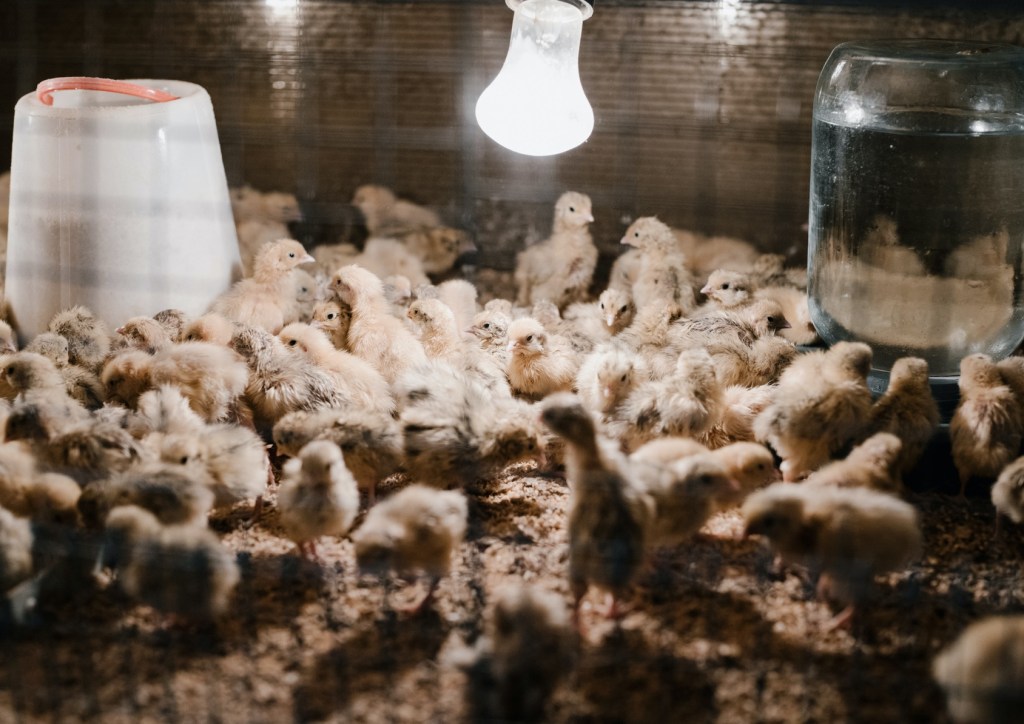
By many measures, Ueli Stauffacher’s poultry farm is exemplary. Located about 30 minutes southwest of Zurich, the chickens it raises for meat (called broilers in agricultural parlance) are housed in two spacious, well-kept barns. One of those barns is outfitted with heated floors that keep the birds’ bedding dry and a state-of-the-art filtering system that strips away the overpowering smell of ammonia that typically characterizes chicken farms, leaving the air inside remarkably sweet and clean. Solar panels on the roof generate enough electricity to power the whole farm renewably. Stauffacher and his wife even host playgroups at the farm, complete with a brightly-decorated break room where children can watch the chickens through a window as they color and enjoy snacks.
Yet the 40-year-old farmer fears he may soon be forced to either dramatically change how he raises birds, or shut down his farm altogether. On Sept. 25, the Swiss go to the polls to vote on an addition to the federal constitution that would, in a global first, ban intensive, or “factory,” farming. If the proposal passes, the 9,000 broilers that Stauffacher raises in each of his two barns will be reduced to around 2,000 total , and he will either have to build a lot more barns or reduce his flock size significantly in the next 25 years. Neither of these options, he says, is economically viable.
-

This article is available at Sierra
We are young people who have witnessed a world in chaos careening toward climate catastrophe. We have watched and waited our entire lives for people much older and more powerful than us to take care of the crises that were emerging. Yet little has happened. Now our generation is standing up to say, “We are ready to be the adults in the room. We are ready to take the future into our own hands. We are ready to envision reality in a different way.”
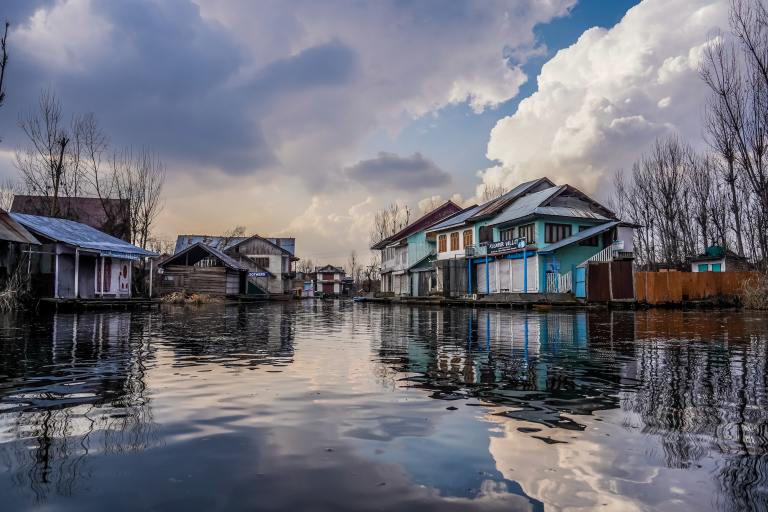
A defining moment for me was December 2015, when a series of extremely strong floods deluged Tamil Nadu, the state in India that my dad (and a lot of my family) is from. It was amazing to me, looking at the images on my computer from half a world away, to be able to see the streets that I had walked on as a kid with my grandma or driven on with my grandfather in his little car. Suddenly I was seeing women and children who somehow looked very familiar to me walking waist-deep or chest-deep in water, traveling miles to sanctuary.
My grandparents were, fortunately, not in town at that time, but the water had come all the way up to their apartment floor. Hundreds of people died in that flood, and thousands were displaced. That was 2015, and it was a big wake-up call to me that the climate crisis was right now. The increase in the number and severity of flooding episodes—predicted as a result of climate change—was happening now, in the present, not in the future. That was the moment. I thought, What do I have to lose? This time it was someone else’s grandmother; the next time, it could be mine. We didn’t have time to waste.
If we had based our goals and our ambitions on the parameters of today’s political possibilities, we would never have been successful. That very same month, my friend Sarah and I decided we were going to start an environmental movement for young people. We needed a movement that could be powerful and could grow quickly—quick enough to respond to the climate crisis as it is worsening all around us. This was the beginning of the Sunrise Movement. What we found when we were creating Sunrise was that there was no political home for young people in America who were concerned about the climate crisis. There was no political home for teenagers and twentysomethings who woke up every day horrified by the crisis and went to sleep imagining a chaotic, climate-disordered world. We realized that it would be absolutely game-changing if we could harness the power of young people—all their passion, optimism, and hope—and translate it into campaigns for long-lasting political change.
Young people have historically played an important role in social movements and political change. John Lewis was just a college student when he became a leader in some of the most intense protests of the civil rights movement. Then there was Diane Nash, whose youth campaigns were crucial to its success. James Lawson organized young people on campuses across the country in large part because he understood the role that young people played—in being willing to take risks and have courage, not living or being governed by the rules of yesterday. I think that’s one of the most unique things about young people: We’re not jaded about what is or isn’t possible. We just know what needs to happen, and we work like hell to make sure that it does. That’s how progress happens.
Youth movements have a particular approach to working for change, and we at Sunrise have been inspired by them. I think of four lessons in particular that we’ve learned from them. One of the biggest and most important principles of effective protest is this: In your demands and your vision, don’t lead with what is possible in today’s reality but with what is necessary—for, say, the survival of humanity, or for achieving the ultimate goals of whatever campaign or issue you’re working on. So often, I find that older generations are hindered by their view of what is possible or impossible right now. The most common things I hear are “It’s not practical” and “It’s not realistic, considering who’s in office right now,” and so on. Everything that Sunrise has achieved has been under a Trump administration. If we had been led by that more pragmatic doctrine, if we had based our goals and our ambitions on the parameters of today’s political possibilities, we would never have been successful.
Second, we were unafraid to go after not just Republicans—who were denying the validity of climate science and supporting misinformation campaigns—but also Democrats. We said to them, “You, too, have not done enough on this issue. You have said you believe the science. You have voted the right way. But truly, we need champions. We need fighters. We need people who are ready to stick their necks out on issues, who will fight day in and day out, who will be the leaders that we so badly need on the critical issues and talk about them from racial and economic justice perspectives.” What’s crucial is being willing to call for the level of action you want, no matter what your political affiliation is.
Third, storytelling is powerful. When we went into Nancy Pelosi’s office [during a protest in 2018], we didn’t just deliver a petition with a bunch of numbers about parts per million or 2°C. We shared stories about what we had lost because of the climate crisis, or what we were afraid of losing. We told stories about what we hoped for our future. Some of the storytellers were in high school, not even able to vote yet, but were engaged in politics because of how much they cared for their future. People told stories about what it was like to live through hurricanes and come out the other end, about the trauma these experiences instill, and about their hope that such traumas don’t have to be the story for future generations.
Fourth, young people are amazing these days at using all the tools at our disposal to reach other young people, sharing our ideals not just from a political perspective but also from a cultural perspective. We powerfully marry digital organizing with offline organizing, using humor, TikTok, Instagram, and other tools. We saturate culture with our ideas, reaching people through song, art, video, and graphics. Many people have told me they joined Sunrise because they really liked our logo. We thought a lot about our logo and its meaning; we also had a designer work carefully on it and come back to us with multiple iterations. Your visuals and communication, both digitally and offline, have to communicate something significant to people.
Right now, we are seeing an expansion of what is possible. Take, for example, someone like Joe Biden, the very definition of a moderate candidate, who at the beginning of 2020 had one of the weakest climate plans among all the Democratic candidates. The pandemic hit, and then a massive uprising around racial injustice took the country and the world by storm. Biden has defined himself over his career largely as an incrementalist. Yet now, because of these huge systems-disrupting problems and the calls for transformative change, he’s being forced to consider far bigger, broader, and more transformational solutions. They might actually be systems-shifting reforms. For example, his climate plan grew from a $1.7 trillion green jobs and infrastructure plan over 10 years to a $2 trillion plan over four years, with 40 percent of those investments going directly to frontline communities. It’s hard to even fathom what that could do for communities of color and poor people around the nation. It’s far more than any other president or president-elect has committed to on this issue.
The biggest thing that needs to happen for a better future is that ordinary people need to get more power. I don’t expect power holders or people in office to make that happen. We have to build movements. In particular, we need to rebuild youth movements and the labor movement. We have to have the discipline, strategic acumen, and intellect of the fighters who came before us. And we have to grow our ranks by orders of magnitude.
The truth is that you can dream up all the white papers you want and create all the policy proposals you want, but we can’t enact any of it into reality if we don’t have power. That is the bottom line for me when answering almost any question about what is and isn’t possible in the next few years. The road forward is uncertain. But the question of what’s possible stretches us to open up our imagination and create new worlds in ways that we might never have dreamed of before.
-

Image: Invest in your planet sourced from Futurism.com
This article was first published on Forbes
In January 2021, I published an article on the urgency for an IMF Climate Stablecoin that would offer incentives to nations to decarbonize their economy within the context of the 2015 Paris Treaty. The solution I proposed needs an update. In the interim, the idea has become less maverick thanks to, among others, the building blocks offered by Diem, Facebook’s stablecoin project, and Kim Robinson’s sci-fi novel Ministry of the Future. In the novel, Robinson introduces a carbon coin, inspired by a conceptual framework designed by Delton Chen, founder of the Global Carbon Reward Initiative. Today, the need for an IMF Climate Stablecoin has become even more pressing. The articles will focus on the heightened rationale for an alternative monetary innovation as well as on detailed design features, coupled with a numerical backup. The articles will also impart practical implementation guidelines as well as include measures to contain inflationary misgivings concerning the construct.
-

This article is available on GatesNotes
I got hooked on video lectures back in the Stone Ages—when you had to order them on DVD. Now that they’ve moved to streaming, I’ve watched courses on many different sites, but I’ve probably spent the most time on Wondrium. (It used to be known as the Great Courses.) Like a lot of people who love online learning, I have my list of all-time favorite professors and classes. Timothy Taylor’s lectures on economics and John Renton’s geology talks are near the top. I’ve also enjoyed three series on the history of the Bible and one on birdwatching, among others.
-

This article is available on Big Think
Most people are stuck in the familiar default frame that sees many of our old systems breaking down in the face of myriad challenges like climate change, polarized politics, economic and social inequities, the paralysis of liberal democracies, and the rise of authoritarian states. That’s as far as they can see.
Yet we’re now at the point where we can view what’s happening, and what’s soon coming, through the lens of the future. That view sees the many nascent systems emerging that are superseding the old ones breaking down. This perspective sees many slow-moving positive developments coming to head, transformative technologies ready to scale, and new trends building to the tipping point. This perspective focuses not on breakdown but on rebirth.


 The Good Future Project