• The world is missing its lofty climate targets – via The Economist

    “First, cutting emissions will require much more money. Roughly speaking, global investment in clean energy needs to triple from today’s $1trn a year, and be concentrated in developing countries, which generate most of today’s emissions. Solar and wind power can be cheaper to build and run than more polluting types, but grids need to be rebuilt to cope with the intermittency of the sun and the wind. Concessionary lending and aid from rich countries are essential and a moral imperative. However, the sums required are far greater than what might plausibly be squeezed out of Western donors or multilateral organisations such as the World Bank.

    So the governments of developing countries, especially middle-income ones, will have to work with the rich world to mobilise private investment. On the part of developing countries, that will involve big improvements to the investment climate and an acceptance that they will have to cede some control over energy policy. On the part of donors, it will involve focusing spending on schemes that “crowd in” private capital, such as indemnifying investors against political and regulatory risks, taking equity stakes in private projects and agreeing to absorb the first tranche of losses if things go wrong. They will have to do things they dislike, such as helping the poorest countries shut coal plants. But without give on both sides, the world will bake.”

    The world is missing its lofty climate targets. Time for some realism


    Read more

  • The EU wants to put companies on the hook for harmful AI
    “Powerful AI technologies are increasingly shaping our lives, relationships, and societies, and their harms are well documented. Social media algorithms boost misinformation, facial recognition systems are often highly discriminatory, and predictive AI systems that are used to approve or reject loans can be less accurate for minorities.”

    The EU wants to put companies on the hook for harmful AI


    Read more

  • Utopia to Dystopia to Polytopia to Eutopia – By Philip Horváth

    If you have been around two year old children you have probably experienced them screaming out words in joy. They mischievously delight, especially at words they are not supposed to say. They play with words. Words have not yet become loaded with connotations and associations — especially not too many painful ones. Once we have had our heart broken, “love” for example has suddenly many new connotations it did not have before.

    Words allow us to grasp the persistence of objects.

    Kids learn this around the age of two. With persistence of objects now also develops a sense of time, the past and future become possibilities. We become “time-binders” as Count Korzybski called it.

    Through words we can imagine what could be.

    All creativity requires imagination. We have to allow ourselves to suspend our current reality and imagine what could be in the world in order to create it.

    Humans have always done that. From the first cave paintings still using crude pictorial language to imagine the successful hunt — and consequently create it — , all the way to imagining and realizing space travel.

    Throughout time we have created and told stories of possible futures.

    Especially, when they are desirable futures, we call them utopias.


    Read more

  • Yeah, We’re Gonna Need to Leave That Shit in the Ground

    A new report from climate research organization Oil Change International has found that almost half of the fossil fuels that could come out of existing coal mines and oil and gas fields need to stay untouched, if we’re going to stop warming at less than 2 degrees Celsius above pre-industrial levels.

    Oil Change International researchers added estimates of already developed oil, gas, and coal projects and how much carbon they would emit and calculated that 40% of those fossil fuels need to stay in the ground to avoid blowing past our carbon budget. This work helps expand on the International Energy Agency’s report, which found that no new oil and gas fields or coal mines can be developed if the world plants on staying within 1.5 degrees C warming.

    “That’s where we get the conclusion that we’ve already developed too much,” Kelly Trout, co-author of the study and research co-director of Oil Change, told Earther. “If policymakers wanted to aim for a higher certainty of staying below that limit, there would actually need to be more fossil fuels that would need to stay in the ground.””

    Yeah, We’re Gonna Need to Leave That Shit in the Ground


    Read more

  • The Stories We Tell Ourselves – By Brenda Cooper

    The stories we tell ourselves matter. If tell myself a story of apocalypse, I will see the frightening headlines as truths, feel the drumbeat of oppressive news scrolling across the tiny glass screen in my hand, and I’ll sense the distrust of my neighbour who is one political flag short of a full-on raving lunatic from the other side.  But if I tell myself a story of hope, I’ll see the frightening headlines, and I’ll also see the story about a solar-powered village in India and another one about how the war in Ukraine might push shifts to renewable energy to the forefront. I might say, “Thank you, yes,” when my neighbor offers to help with my fallen tree and have a pleasant conversation about his new chickens.

    I write science fiction, climate fiction, poetry, and occasionally, non-fiction. I’m a casual futurist and a professional technologist. I know the power of story.  At work, I can help people accept new systems and new ways of thinking by telling good stories.  In fiction, I can help people feel the emotional punch of hope.

    I’m not talking about blind hope, or ignoring the bad things, for there are many true scary stories now.  It is a frightening time.  But it also a time when there are triumphs.   So let me tell you a story about a triumph.

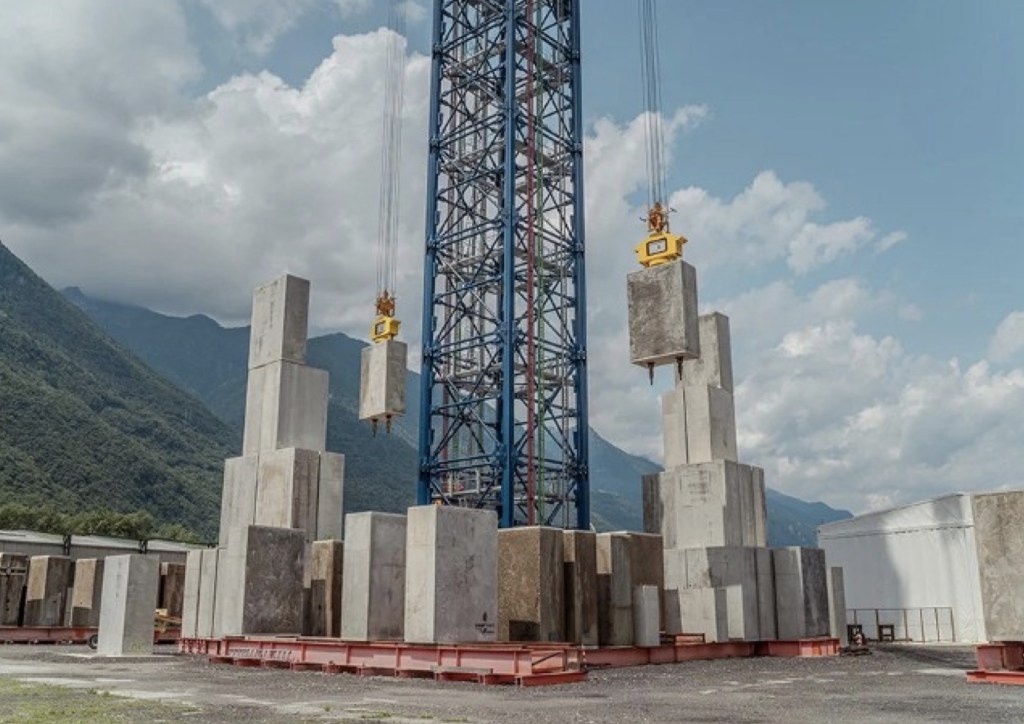
    When the wind blew, Jeff’s town had light and water. He could study for his second-year math tests after dark without using a candle, and there was fresh water to make hot tea with when it grew chilly in the evening. But when the wind didn’t blow, there was only what his mom could eke out of the small portable solar cell his sister had sent them from Canada, and the water they had saved from rain for in the barrels they filled from the well on windy days. 

    Then one day, eight huge trucks trundled into town, bouncing along next to the rutted road. His father and the Mayor and three other men helped cut the sheep fences and Jim used the dogs to keep the sheep away from the trucks.  This wasn’t hard, since the trucks were large and bright coloured and had made scary squeaking sounds. The sheep worried.

    One of the trucks spit out huge robots that men drove, and the other trucks had all the parts of buildings in them. The robots dug a big hole and poured in concrete.  Then they put the buildings together the way he might use his building block and pulley set. He wished he could get closer, but his father had him stay out on the field with the animals. For three days, the men and the robots worked. Wind threw sand and spoil at them and the great windmills on top of the ridge turned and turned. Then on the morning of the fourth day, the robots drove into the trucks, and the trucks jostled away down the road.

    After the men fixed the fence, Jeff could finally look closely at the building, which was seven times taller than his two-story house, strong, and open to the wind. He counted ten great concrete blocks resting on the bottom of the building, attached to chains and pulleys.

    They didn’t move.

    When Jeff went in for dinner and asked his father what the building was, his father smiled, tired from fixing the fence but with his voice full of warmth.  He said, “Wait and see.  You will be able to tell me what is it soon.”

    For the next week, the wind blew and the building worked. The concrete blocks slowly climbed the chains at the behest of a great motor buried under the blocks. The motor worked during the day, but stopped at night, perhaps so that the children of the town could sleep?

    Then, one day, as it always did, the wind stopped.

    The concrete blocks began to fall.

    The well kept working

    That night, he could do his homework, and his mom and dad put on music and danced in the living room even after his bedtime. They even let him stay up and dance, too.

    Over breakfast, Jeff asked his father, again, how the building worked.

    His father smiled and said, “Think about it and tell me.”

    The next three days the wind stayed away, and blocks fell slowly, and then came to rest at the bottom and the well stopped working and the lights went off.  But the following day, when the wind came back, the blocks started to rise again.  Suddenly Jeff knew, and he ran in to tell his father, “It’s a big battery!”

    His father beamed.

    This is a story based on a news article about concrete batteries. Stories can be used in this simple way to illustrate how a technology might work.  Stories can also be used to handle far more complexities. The best recent example of climate fiction that grapples with the multiple layers of change needed to succeed and thrive is Kim Stanley Robinson’s Ministry for the Future. Even on the simplest level, such as adopting either a belief that we will destroy ourselves or a belief that will find a good future, the stories we tell ourselves, our children, and others matter.

    About the Author:  Brenda Cooper is a technology professional, a writer, and a futurist.  She lives in the Pacific Northwest portion of the United States.  You can find out more about Brenda at her website, http://www.brenda-cooper.com.
  • Why Are People So Unreasonable? By Bill Halal

    It seems that almost any irrational belief can dominate life in the digital age. Liberals are cancelling those not woke, being politically correct and defunding the police – while conservatives are convinced of the big lie, anti-vaccination, and climate denial. The Knowledge Age of the past two decades was supposed to bring greater understanding and even enlightenment. So why are people so emotional, misinformed, and unreasonable?

    Because today’s flood of smartphones, social media and artificial intelligence is driving the world beyond knowledge into a new frontier governed by emotions, values, beliefs, and higher-order thought. The world is entering an Age of Consciousness, though it’s dominated by post-factual nonsense, political gridlock and other threats that pose an existential crisis. Henry Kissinger recently wrote in Time: “… what fascinates me is that we are moving into a new period of human consciousness which we don’t yet fully understand.” 

    This rule of unreason pervades life, and it is rampant in politics. The US government, for instance, has been locked in stalemate for decades, though Congress has more knowledge than it can handle. Emotional issues like abortion, gun control and immigration are supported by strong majorities and have been studied to death. Still, gridlock persists because of conflicting values, reluctance to compromise, and hunger for power – issues that lie beyond knowledge. They hinge on stark differences in consciousness.

    This dilemma poses one of the great ironies of our time. The digital revolution has created a wealth of knowledge that is almost infinite. The smartphone alone has made the world’s store of information available at the touch of a finger. There is no shortage of knowledge, but the power of facts is badly limited. Knowledge cannot tell us what is worth doing, or what is right morally and what is wrong. Rational logic can never replace love, wisdom or a guiding vision.

    My studies of social evolution show that this rise in consciousness is part of a far broader “Life Cycle of Evolution (LCE).” Above the rise and decline of empires, wars and other random events, evolution traces a precise historic direction. It took nine thousand years to evolve from Agrarian Era to Industrial Society about 1850. One hundred years to the Post-Industrial Service Era in 1950. Five decades to a Knowledge Age in 2000. The pace of the LCE and today’s wave of post-factual thought show we are entering Age of Consciousness about 2020.

    Consciousness appears to be the culminating phase in social evolution, and it poses enormous threats that seem almost impossible. Climate change, pandemics, gross inequality and other end-of-the-world challenges comprise a “crisis of global maturity.” The covid pandemic made it clear that the present world system is not sustainable. The late Stephen Hawking worried: “…widening inequality, climate change, decimation of species, epidemic disease, acidification of the oceans. This is the most dangerous moment in the development of humanity, and our species must work together.” (The Guardian, Dec 1, 2016)

    The global crisis is an infinitely larger version of the same crisis of maturity that transforms teenagers into adults. At some point, the stress becomes so severe that most teens eventually find the courage to grow up and become responsible adults. In a roughly similar way, today’s global crisis is humanity’s challenge to become a mature civilization. The world is being forced to grow up, meet this historic challenge, and develop a sustainable civilization – or face disaster.

    Social evolution also shows that each stage has been propelled by revolutions – the Agrarian Revolution, the Industrial Revolution, Post-Industrial Revolution and, most recently, the Digital Revolution. For instance, the Industrial Revolution was made possible by the rise of the Protestant Ethic, or “economic man.” Now the world seems to be in the throes of a mental/spiritual revolution to kick-start global consciousness. We appear to be heading toward some type of historic shift in thought, a collective epiphany, new mindset, or global ethics.

    Other studies forecast that a global consciousness is likely to emerge among the leading edge at about 2030 +/- 5 years. Transforming the global mindset seems formidable, but examples are seen all around us. When William Shatner flew into near-earth orbit and saw the Earth as a living system aglow with life, he was flooded with profound emotion …  the iconic Captain Kirk experienced global consciousness.

    A mature global order will still bear the normal human failings, but it will make our current strife look as primitive as the brutal reign of kings in the feudal ages. This may sound too good to be true, yet these trends suggest we are likely to see a rising global consciousness soon and the triumph of human spirit, once again.

    William E. Halal, PhD, is Professor Emeritus at George Washington University. Professor Halal has published seven books and his articles have been published in the New York Times, Washington Post, Fortune, and other major media. He was cited by the Encyclopaedia of the Future as one of the top 100 futurists in the world. He also served as a major in the US Air Force, an aerospace engineer on the Apollo Program, and a business manager in Silicon Valley. His new book, Beyond Knowledge: How Technology Is Driving an Age of Consciousness (Foresight Books, August 27, 2021), explores a vision for the next stage of human evolution. Learn more at billhalal.com

  • Where simulation ends and reality begins: an interview with David Chalmers
    “We know that everything goes through sense perception and the exact form of how it appears to us is constructed in the brain: all perception is mediated. So the only meaningful sense in which I really do see or hear you, even in real life, is that what I am seeing and hearing is in some importantly truthful way causally related to you.”

    Where simulation ends and reality begins: an interview with David Chalmers – Prospect Magazine


    Read more

  • Can a frequent flyer tax could solve aviation’s carbon challenge?
    “The global aviation industry is responsible for about 2.5 per cent of the world’s carbon emissions – a bigger contribution than Australia – and if the aviation industry was a country, it would be one of the world’s 10 worst polluters.

    Before the COVID-19 pandemic, airlines were scrambling to adopt various measures to combat emissions and soothe growing guilt among passengers about travelling, including voluntary carbon offset schemes and investing in sustainable jet fuel.

    But now, with travellers again flocking to the skies after two years of on and off lockdowns, sustainability experts believe the best way for the sector to meaningfully cut emissions is by taxing frequent flyers. That could be good news for carbon-conscious travellers, but also a problem for Australian airlines and passengers.”

    Can a frequent flyer tax could solve aviation’s carbon challenge?


    Read more
  • The pleasure, the pain and the politics of a digital detox

    A decade ago, smartphones would constantly ring in public; now, social norms dictate that the sound be off. Individuals, cultures and societies define when it is appropriate or necessary to put away digital devices.

    ‘It’s addictive,’ says a woman in her 40s. She occasionally deactivates her social media accounts and does a digital detox every summer. For her, logging off is ‘a mixture of liberation and abstinence’. A middle-aged man takes periodic breaks from ‘toxic’ news coverage and describes his computer as a ‘digression machine’: ‘You just lose it, it has such a strong logic of its own.’ A young woman ‘loves social media’ but needs pauses. She believes your ‘social antennas’ deteriorate: ‘You get worse at conversing and being present for those around you.’

    Together with colleagues, I study why and how people take breaks from digital media. The statements above are summarised from interviews. It is difficult to pin down the frequency and nature of digital disconnection, but evidence of perceived overuse is everywhere. In surveys, a sizeable proportion of the population answers affirmatively to the question ‘Do you think you are spending too much time online?’ Self-help books and online sites flourish with tips for logging off. Mass media and academic articles discuss screen times, addictive behaviour, and motives for disconnection.


    Read more

  • Our Amazing Clean Energy Future Has Arrived

    Its attention consumed by pandemics and politics, the world has overlooked an undeniable silver lining: the arrival of the green future. Almost without exception, renewable energy is now cheaper than that produced from fossil fuels. Prices of battery packs for electric vehicles and solar panels continue to plunge, and adoption is increasing exponentially. The 2020s will be the decade in which the planet finally closes the chapter on destruction and pollution by fossil fuels and enters a new realm of clean and nearly free energy. And this changes everything.

    The evidence of a great green wave is now overwhelming. According to BloomergNEF, in 2020 the world spent half a trillion dollars on renewable power, electric vehicles, and other clean technologies and got a lot more for this investment than it ever used to. The average cost of lithium-ion battery packs, critical to electric vehicles, plunged from more than $1,100 per kilowatt-hour a decade ago to below $140 in 2020. Some factories in China dropped their prices below $100. Although lithium-ion battery prices are not on a Moore’s Law curve of decline, they are dropping at an inflation-adjusted rate of roughly 13 percent per year—halving over four years.


    Read more